7 Signs of Hidden Mold: How to Detect It In Your Florida Home

Updated: Oct 5
The Florida Mold Problem: Is Your Home At Risk?
If you live in Florida, you live in the nation's mold capital. With its high humidity, constant moisture, and susceptibility to storm damage, Florida consistently ranks as one of the states most impacted by residential mold growth. Mold isn't just an ugly stain; it's a silent threat that degrades your home's structure and can trigger health issues, especially when it grows hidden behind walls, under floors, or in your HVAC system.
At Right On Time Restoration, we know that mold thrives on moisture, and in a climate like ours, it only needs 24 to 48 hours to take hold after a leak or flood.
Don't wait until you see the fuzzy black or green patches. Here are the 7 subtle but critical signs that hidden mold is lurking in your Florida home, and what you need to do immediately.
#1 The Persistent Musty or Earthy Odor

The most common indicator of hidden mold is often the simplest: smell. Mold releases Microbial Volatile Organic Compounds (MVOCs) as it feeds on organic material. If you notice a damp, stale, or decidedly musty odor that doesn't disappear with cleaning or airing out, you likely have a hidden mold colony.
Florida Tip: The smell is often strongest in confined spaces like closets, pantries, or crawl spaces where ventilation is poor.
#2 Unexplained Allergic or Respiratory Symptoms

If you or a family member is constantly experiencing flu-like symptoms, year-round allergies, or persistent respiratory irritation that only seems to flare up when you are inside your home, mold is a prime suspect. These symptoms can include:
These symptoms can include:
Chronic coughing or wheezing
Stuffy or runny nose
Itchy, watery, or red eyes
Unexplained headaches or fatigue
Mold exposure can be particularly dangerous for children, the elderly, and those with asthma, triggering serious reactions.
#3 Peeling, Bubbling, or Warped Wall Surfaces
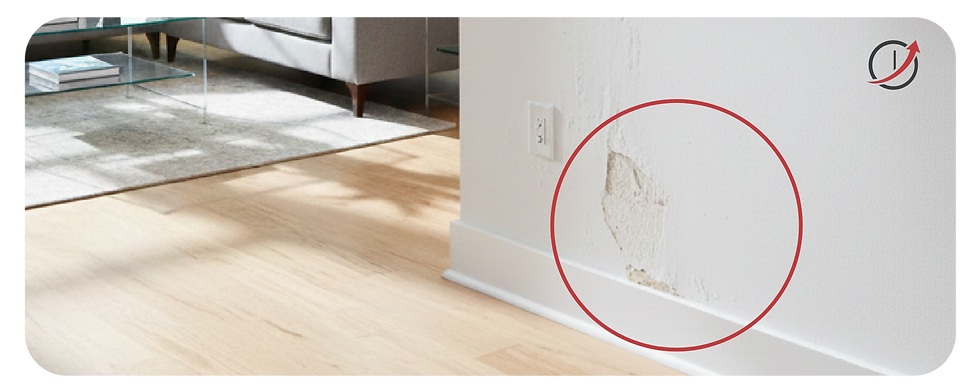
When hidden moisture accumulates behind drywall or wallpaper, it creates a perfect mold environment. As the mold grows, it compromises the material, causing physical changes on the surface you can see. Look for:
Peeling paint or wallpaper that seems to pull away from the wall.
Bubbling or blistering on painted surfaces.
Warping or bowing on drywall or wood trim.
This is a clear visual indication that a moisture source (like a slow pipe leak) and mold are active behind the finished surface.
#4 Excessive Condensation on Windows or Pipes

Mold needs moisture, and condensation provides a constant water source. If you frequently observe significant condensation on the inside of your windows, metal pipes, or exterior-facing walls, your home's humidity level is likely too high (above 60%).
Actionable Step: While high humidity is common in Florida, prolonged condensation indicates an HVAC or ventilation problem that is actively encouraging mold growth.
#5 Water Stains or Discoloration on Ceilings and Walls

A slow roof leak or a plumbing issue upstairs often manifests as a water stain downstairs. These stains, typically yellow, brown, or grayish patches—indicate that water penetrated the ceiling or wall material.
Even if the leak has been "fixed," the stain is proof that the material was saturated. Any material saturated for more than 48 hours is almost guaranteed to have active mold growth, which will continue to spread even after the water source is removed.
#6 Deteriorated Grout or Caulking in Wet Areas

Inspect the grout lines between the tiles in your bathroom, shower, or kitchen. While a little mildew is common in Florida baths, if the grout is chronically dark, slimy, or disintegrating, it may be a sign of mold that has penetrated the sealant and is now growing in the porous material behind the tiles.
Similarly, check the caulk line around your tubs, sinks, and windows. If it is cracked, shrinking, or missing, it allows water to penetrate the wall cavity, where hidden mold can flourish
Similarly, check the caulk line around your tubs, sinks, and windows. If it is cracked, shrinking, or missing, it allows water to penetrate the wall cavity, where hidden mold can flourish.
#7 Recent or Past Water Intrusion Events
If your home has ever experienced a flood, hurricane damage, a burst pipe, or even a slow-draining leak that lasted longer than two days, you must assume mold is present until proven otherwise.
Mold spores become airborne and settle on damp materials, and the structural components of your home—like subflooring and framing—act as a perfect food source once they are wet.
📞 Don't Detect It—Trust the Experts to Inspect It.
If you have identified two or more of these signs in your home, you have done the first and most crucial step in mold detection. The next step is professional confirmation and removal.
DIY solutions only treat surface mold and rarely address the hidden source. At Right On Time Restoration, we specialize in:
Professional Mold Inspection: Using state-of-the-art thermal imaging and moisture meters to locate hidden mold and the source of moisture.
Safe Mold Remediation: Containment, removal, and air purification to safely eliminate the threat and restore your home's air quality.
Water Damage Repair: Fixing the root cause of the mold issue to ensure it does not return.
If you suspect hidden mold in your Florida home, contact the trusted local experts at Right On Time Restoration today for a professional, detailed inspection.
Call (561) 778-7880, click > or visit www.rightontimerestoration.com to schedule your appointment.


Call Today At (561) 778-7880 
Other Way To Contact Us 
Learn More About Right On Time Restoration


Comments